Realistic model
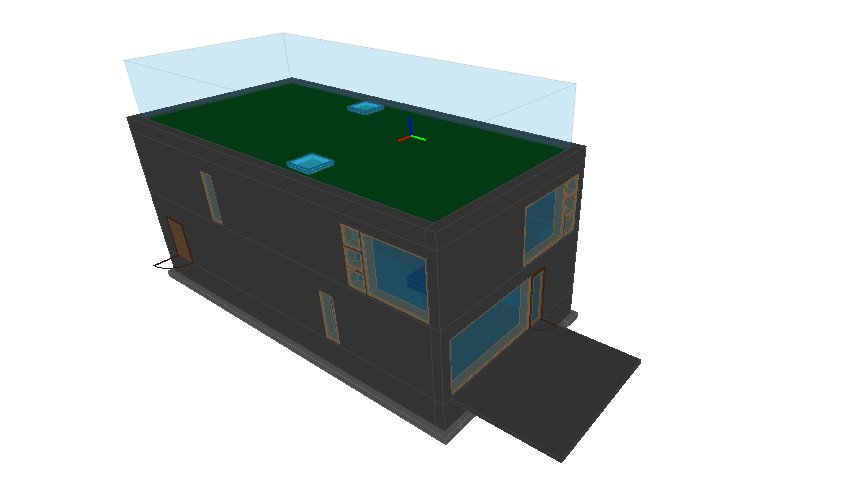
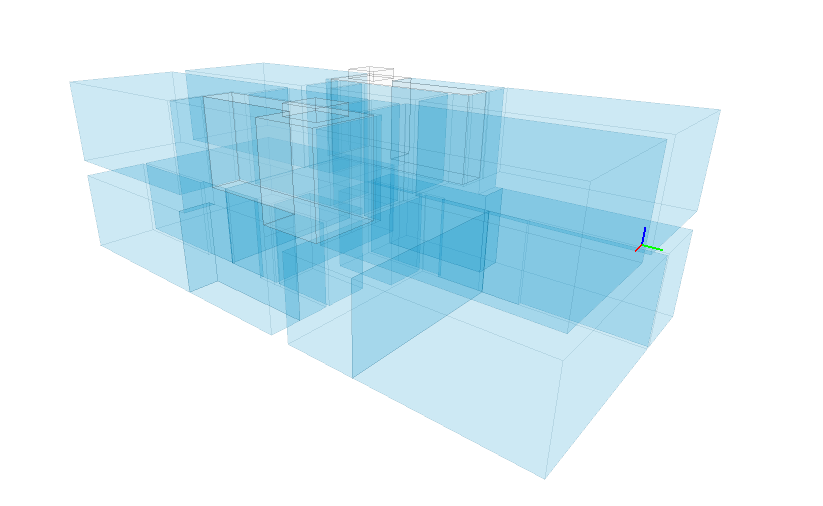
This tutorial uses a realistic BIM model: the duplex apartment sample model, a two-storey dwelling with many rooms
(Duplex_A.ifc in tests/models/space_boundary).
from pathlib import Path

from ifctrano.building import Building

building = Building.from_ifc(Path("Duplex_A.ifc"))
building.save_model()
or
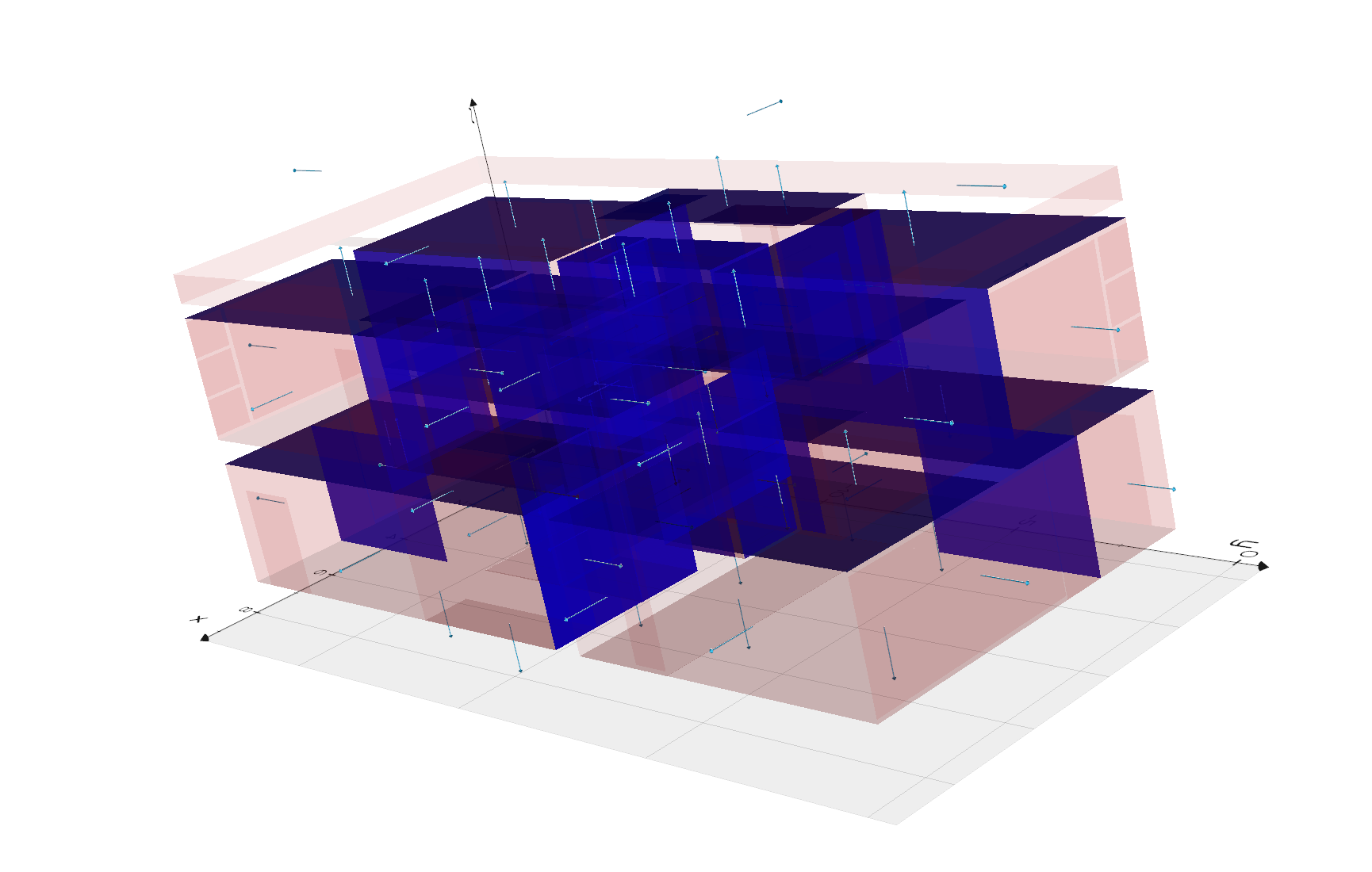
The space boundaries derived from the geometry:
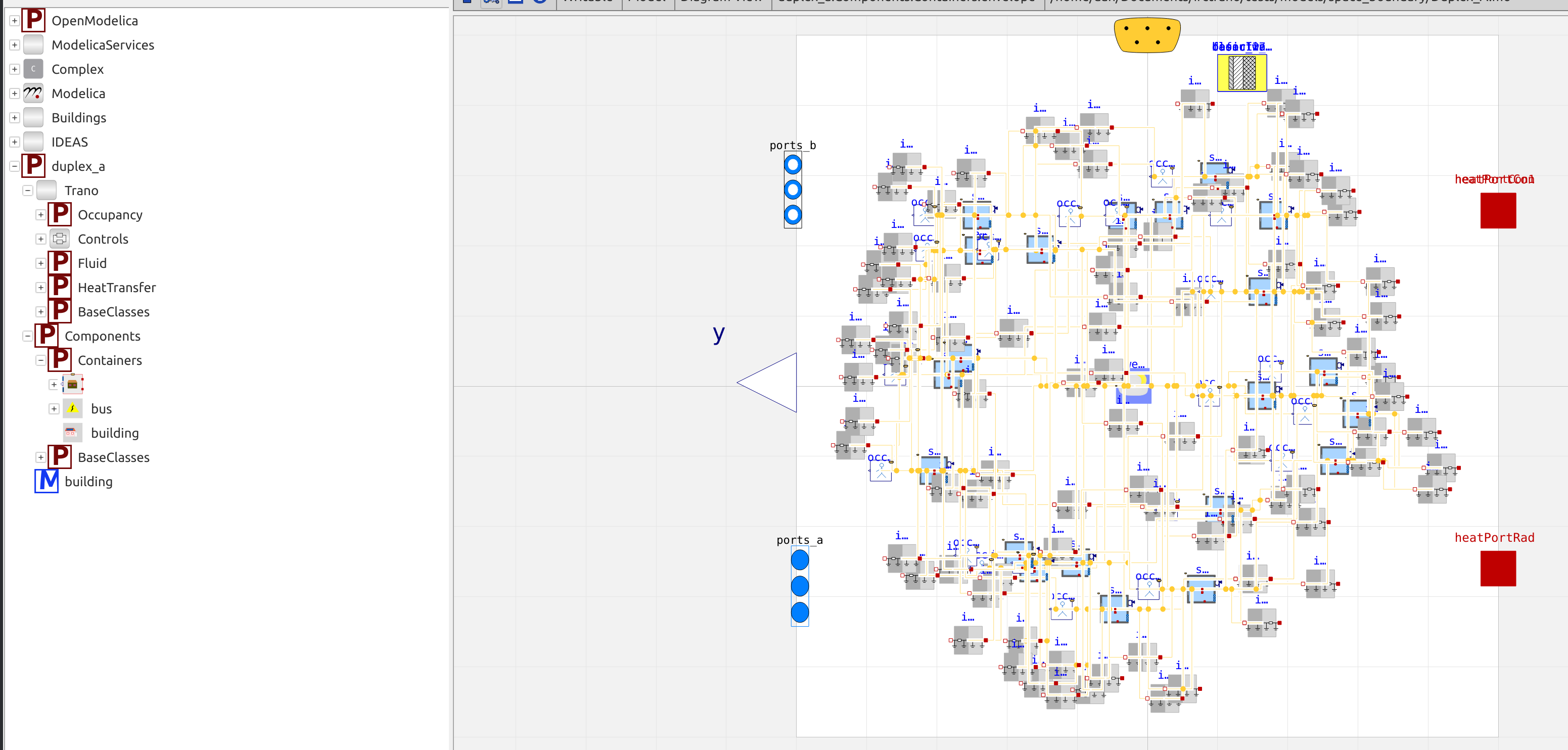
The generated model in OpenModelica (taken with an earlier version; the layout may differ):
Results
Free-floating zones (the model has no heating) for the first ten days of January.
Days 3 to 10 of the year (the first 2 simulated days are a warm-up and are left out).
| Case | Zone | Mean [°C] | Minimum [°C] | Maximum [°C] |
|---|---|---|---|---|
| Duplex | A101 | 12.2 | 10.0 | 15.3 |
| Duplex | A102 | 13.4 | 6.0 | 42.9 |
| Duplex | A103 | 11.5 | 9.3 | 14.6 |
| Duplex | A104 | 10.7 | 9.5 | 12.1 |
| Duplex | A105 | 11.0 | 9.3 | 13.2 |
| Duplex | A201 | 13.6 | 11.4 | 16.4 |
| Duplex | A202 | 11.1 | 7.5 | 19.9 |
| Duplex | A203 | 12.2 | 8.4 | 26.9 |
| Duplex | A204 | 12.7 | 10.8 | 15.4 |
| Duplex | A205 | 12.4 | 10.4 | 15.0 |
| Duplex | B101 3q | 11.0 | 9.3 | 12.8 |
| Duplex | B102 cz | 8.6 | 5.2 | 13.2 |
| Duplex | B103 3s | 11.8 | 9.5 | 14.8 |
| Duplex | B104 3p | 10.5 | 9.4 | 11.8 |
| Duplex | B105 | 10.5 | 9.0 | 12.4 |
| Duplex | B201 3g | 13.0 | 11.1 | 15.2 |
| Duplex | B202 3a | 10.6 | 8.5 | 15.8 |
| Duplex | B203 39 | 9.9 | 7.0 | 14.0 |
| Duplex | B204 3c | 12.4 | 10.5 | 14.6 |
| Duplex | B205 | 12.1 | 10.3 | 14.3 |
| Duplex | R301 | 20.0 | 14.4 | 26.2 |
| Duplex | Mean of the zones | 12.0 | 9.4 | 15.8 |
What to expect. Most rooms stay between the outdoor temperature and 15 °C without heating; rooms with large windows and little floor area heat up in the sun.
What the simulation shows. The mean of the 21 zones is 12 °C over days 3 to 10, most rooms averaging between 10 and 13.5 °C. Two rooms stand out:
- A102 averages 13 °C but peaks at about 43 °C on sunny afternoons. It has 11.7 m² of windows for 27.7 m² of floor, and, like every room, constructions made of ifctrano's default material, an insulation-like material of 80 kg/m³ (see the limitations): almost no thermal mass absorbs the solar gains. Such peaks in January are an artefact of the default material properties.
- The roof space R301 averages 20 °C: no roof surface was found for it (only 31.6 m² of external wall for 135 m² of floor), so the internal gains of its large floor area have little surface to escape through.
Edit the material section of the configuration with the real properties of the materials, and check the space
boundaries (--show-space-boundaries), before drawing conclusions on overheating.